Vedic Tradition · Chakra
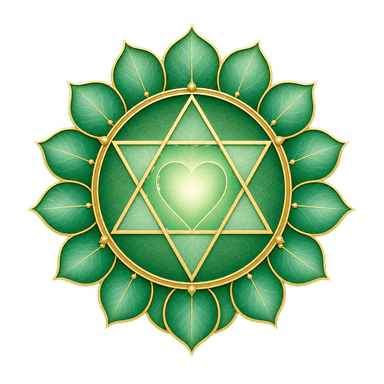
Heart Chakra
Anahata
Love, compassion, connection, forgiveness
Key Facts
Element
Air
Sense
Touch
Body Region
Center of chest
Bija Mantra
YAM
About the Heart Chakra
The Heart Chakra is the bridge between embodied existence and higher awareness, governing love, compassion, grief, and the courage to remain open. Located at the center of the chest, Anahata is the meeting point of the lower three chakras rooted in the body and the upper three oriented toward consciousness. A balanced Heart loves without losing itself, grieves fully and recovers, and extends to itself the same patience it gives to others; a blocked one armors over until even welcome love cannot reach the inside. The Heart is where the work of becoming whole is done.
Physical Signs of Imbalance
Emotional Signs of Imbalance
Healing Practices
- Yoga:Bhujangasana (Cobra), Ustrasana (Camel), and Setu Bandhasana (Bridge). Hold each for 30 to 60 seconds to open the front of the chest and release thoracic armor.
- Pranayama:Anuloma Viloma (alternate-nostril breathing). 5 to 10 minutes balances the energetic currents around the heart and quiets emotional reactivity.
- Meditation:Metta (loving-kindness). Direct phrases of well-being to yourself first, then to a loved one, a neutral person, a difficult person, and finally all beings. 10 to 20 minutes.
- Sound:chant the bija mantra YAM 108 times. Feel the vibration expand at the center of the chest.
- Lifestyle:place a hand on the heart whenever self-criticism arises, and breathe there for three breaths. Perform one small unwitnessed act of service daily. Spend time outdoors with sky and trees visible.
- Diet:green foods (leafy greens, broccoli, avocado, cucumber, herbs), green tea, and meals chosen because they nourish you rather than because they perform a virtue.
Affirmations
“I am worthy of love, and I extend that love to myself first.”
“I open to love without losing myself.”
“My heart can hold both joy and grief without breaking.”
Bija Mantra · Seed Sound
YAM
Pronunciation: "yahm" (rhymes with "calm," with a soft m at the end)
Place both palms over the center of the chest. Chant YAM on a long, easy exhale, feeling the sound expand the sternum from the inside. Repeat 108 times.
When This Chakra Is Balanced
A balanced Heart loves without losing itself. You can be deeply moved without being destabilized. You grieve fully and recover. You extend kindness to yourself with the same patience you give those you love. You are open without being porous, and warm without being hungry for warmth in return.
Take the Chakra Imbalance Quiz
Answer 21 honest questions to see which of your seven chakras is most asking for attention right now - and what to do about it.
Open the Chakra Imbalance Quiz →Explore Related Tools
Ayurveda Prakriti Quiz
Your dosha balance and your chakra balance often surface the same imbalances from a different angle - the body and the energy body in conversation.
Nakshatra Calculator
The Moon's nakshatra at your birth shapes the deepest emotional and energetic patterns you carry - often the same patterns the chakras translate.
Mantra Recommender
Find a mantra calibrated to your current intention. Many traditional mantras work directly on a specific chakra you are trying to open or steady.